
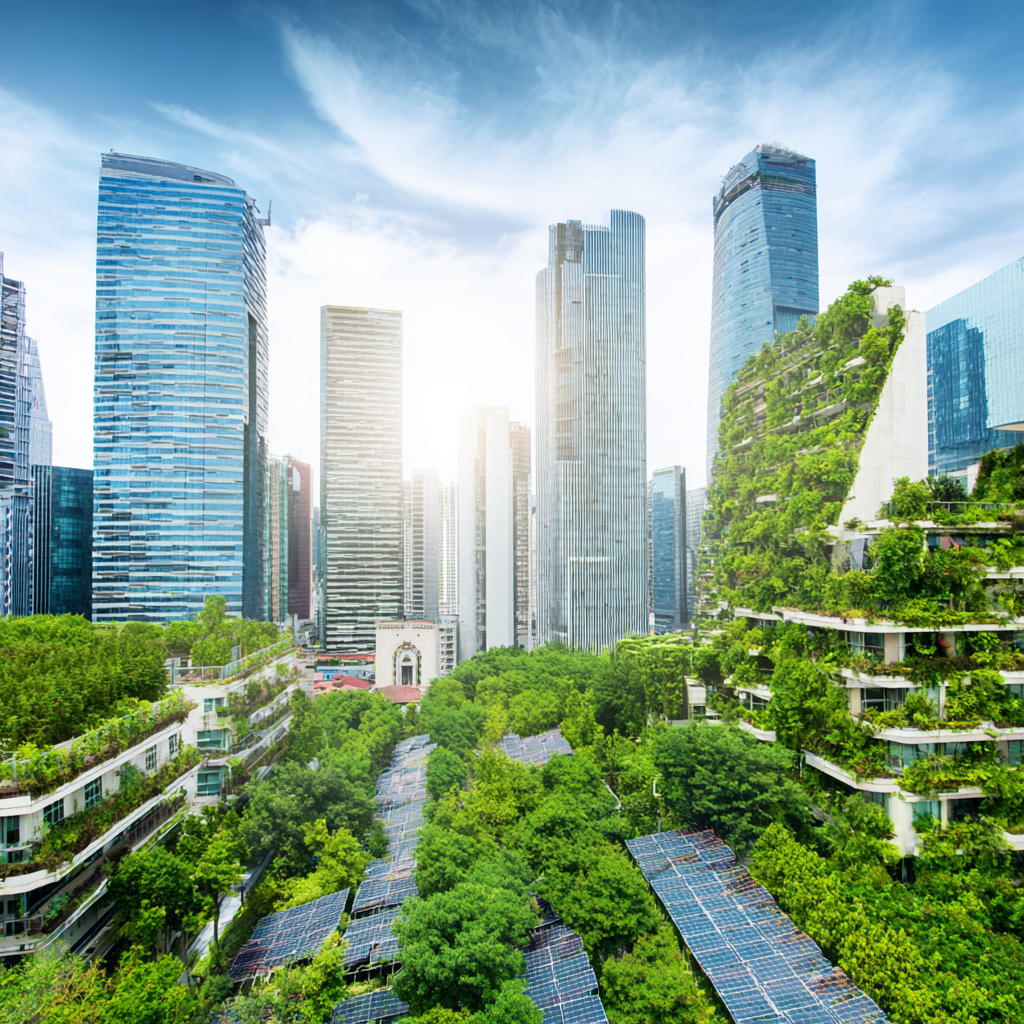
In Romania, several urban regeneration projects have been completed in recent years; however, numerous additional projects remain in the planning stage, with launch dates yet to be determined. Most newly proposed projects are currently undergoing public administration negotiations and community consultations, and do not have confirmed start dates.
Nusco City development
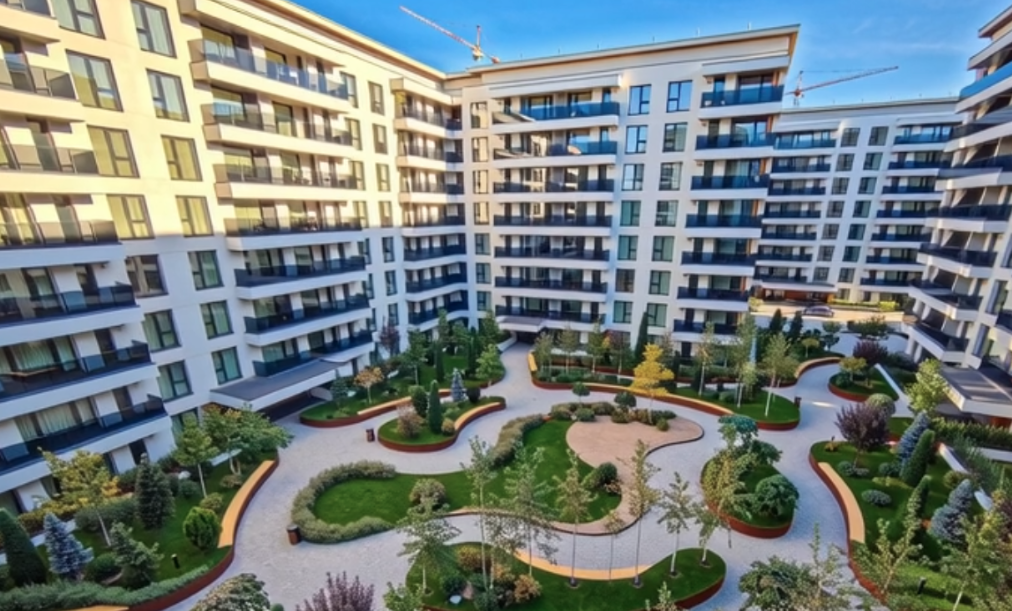
Nusco City is a completed urban regeneration project, constructed between 2020 and 2022 on the former Pipera industrial site in Bucharest. The development encompasses over 23 hectares and includes more than 4,000 apartments, parks, and additional facilities. (Nusco Imobiliara receives building permit for the second phase of the Nusco City project in Bucharest, 2023)
Timpuri Noi Square
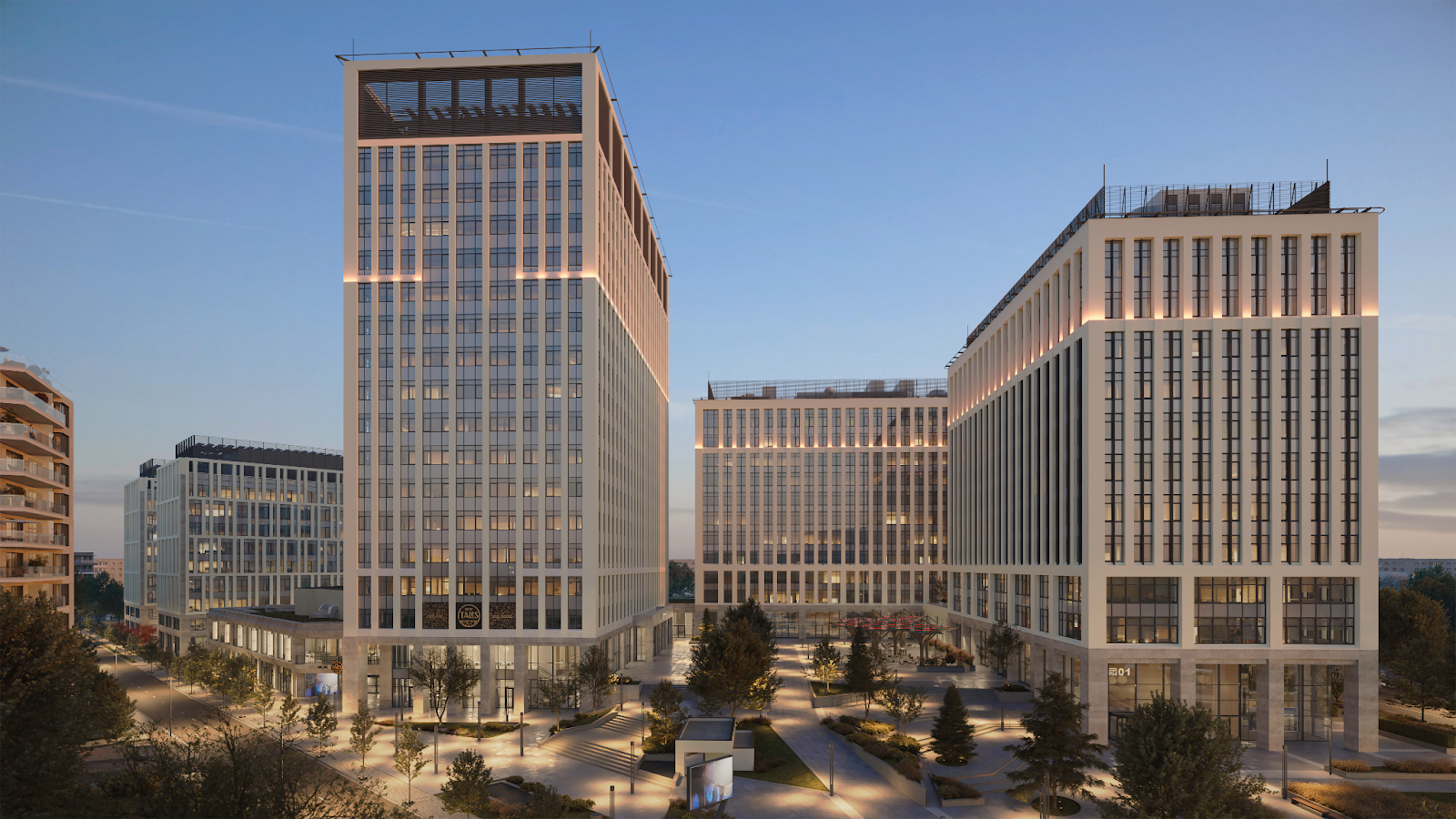
The Timpuri Noi development is structured in two phases. The initial phase, scheduled to commence in 2024, includes two office buildings with integrated retail areas, restaurants, bars, and lounges.
The second phase, expected to be completed in 2027, will add over 60,000 square meters of sustainable office space across two buildings. (Vastint Romania to deliver expansion of Timpuri Noi Square in 2026, 2025)
The project also features Talis, a 6,000-square-meter food hall on two levels, offering specialty coffee, restaurants, live event spaces, 3,000 square meters of green areas, new parking facilities, and direct Metro access.
Carbochim Cluj development
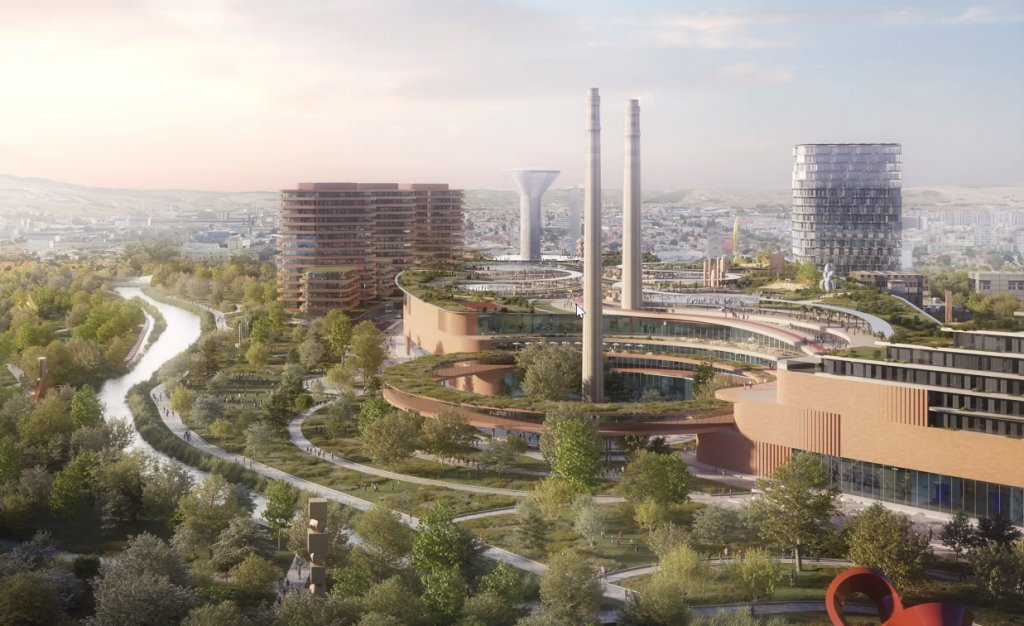
Additional projects are planned for former industrial sites and remain in the planning phase without established launch dates. Notably, the Carbochim project in Cluj will incorporate green spaces, preserved heritage buildings, and multi-use areas. (About the project, 2024)
Another significant example is the involvement of the European Bank for Reconstruction and Development, which provides financing to over 500 projects. Among these, Rivus Investment, a Romanian company, has secured multiple funding lines to develop more than 132,000 square meters of gross lettable commercial space and four entertainment venues in Cluj. (EBRD funds urban regeneration project in Romania, 2025)
Key investments comprise two vehicular bridges spanning the city river, a new roundabout, a smart traffic management system, upgraded public spaces, designated parking areas, a park, and an urban garden exceeding 50,000 square meters.
Rivus Investment is jointly owned, with a 50% stake held by Iulius Real Estate Group, a company specializing in commercial property development and management of over 300,000 square meters of space. (Rivus Investments signs EUR 400 mln club loan to develop shopping mall in Romania, 2025)
In addition to projects on former industrial sites, there are ongoing initiatives for the regeneration of existing neighborhoods and new urban areas. Many of these initiatives are expected to start within the next two to three years. They focus on infrastructure decarbonization, as well as the development of new parks, pedestrian areas, playgrounds, and sports facilities.
Iulius Group aims to transform the Carbochim platform into the local market’s largest urban revitalization.
The Carbochim factory will be relocated and modernized. The development will add retail space, performing arts centers, and restored heritage buildings. (Iulius secures urban zoning plan for Cluj-Napoca project, 2024)
The project adopts an integrated strategy for green spaces, with the primary urban garden connecting to neighboring parks. Pedestrian infrastructure will be comprehensively upgraded. A new business district will be established, featuring a parking facility with more than 6,000 spaces.
The scale of investment corresponds to the infrastructure needs anticipated for the planned future metro line system.
Currently, Carbochim is the largest producer of abrasive materials for professional use in Romania, operating on more than 14 hectares, of which only 30% are utilized. More than 5 million euros will be invested in relocating and modernizing the production facility, with activity continuing uninterrupted. (Iulius announces 500 million Euro investment for urban regeneration project in Cluj-Napoca, 2022)
The new urban development incorporates international best practices, combining cultural heritage with industrial elements to create a distinctive investment. The two heritage buildings on the Carbochim site will be architecturally converted and reintegrated into the community.
This project represents the first instance in Romania where a mixed-use development incorporates a center for performing arts in collaboration with the cultural sector, providing venues for concerts, theater, contemporary dance, design, and related artistic activities.
The project will also provide spaces for startups, coworking, and pilot projects focused on entrepreneurship.
A new eco-friendly neighborhood will emerge in the city’s greenest zone, featuring next-generation houses oriented toward the Someș River and parklands. The design reduces time in traffic and offers residents easy access to services, facilities, and nature, promoting comfort and convenience.
The development will comprise 115,000 square meters of leasable space and 23,000 square meters of smart office facilities, supporting the consolidation of multinational companies in the region.
The development prioritizes pedestrian access, implementing the principles of walkable cities with public transportation facilitation.
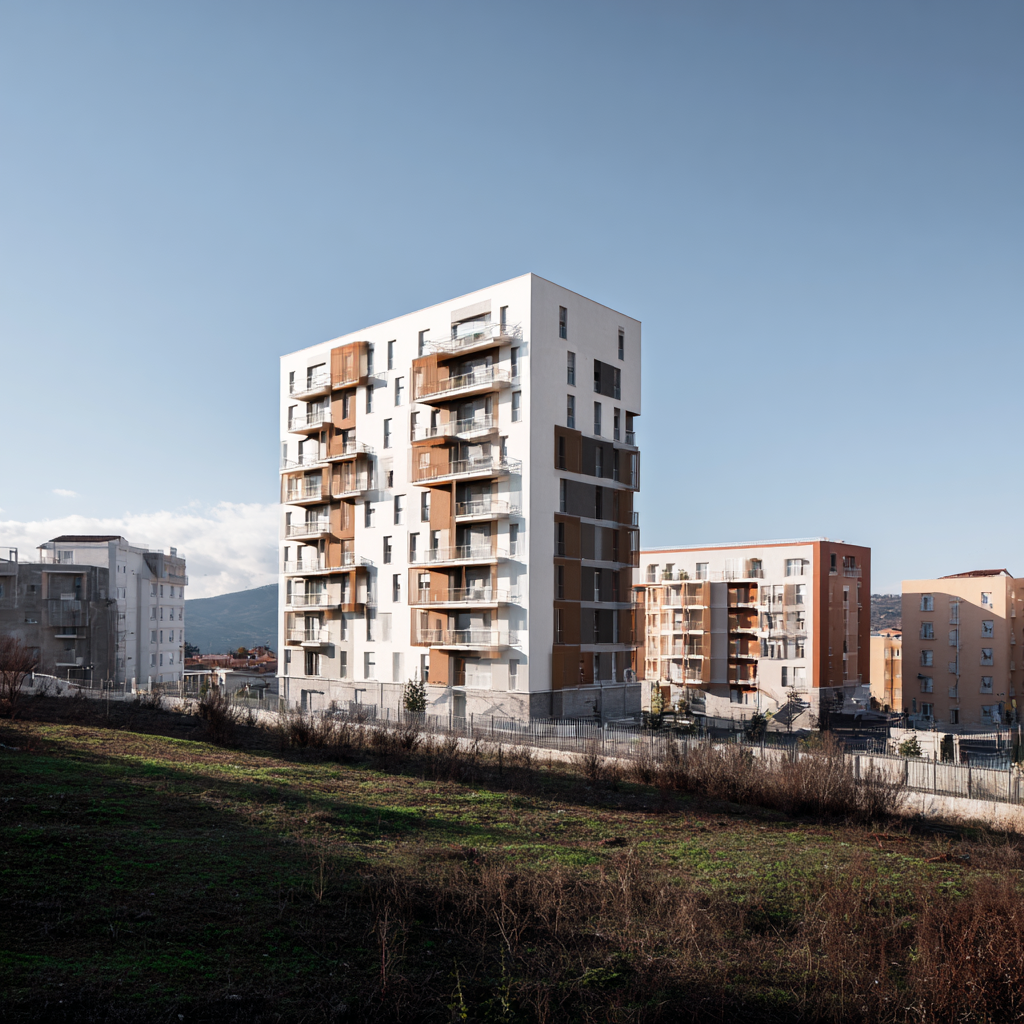
Hills Development
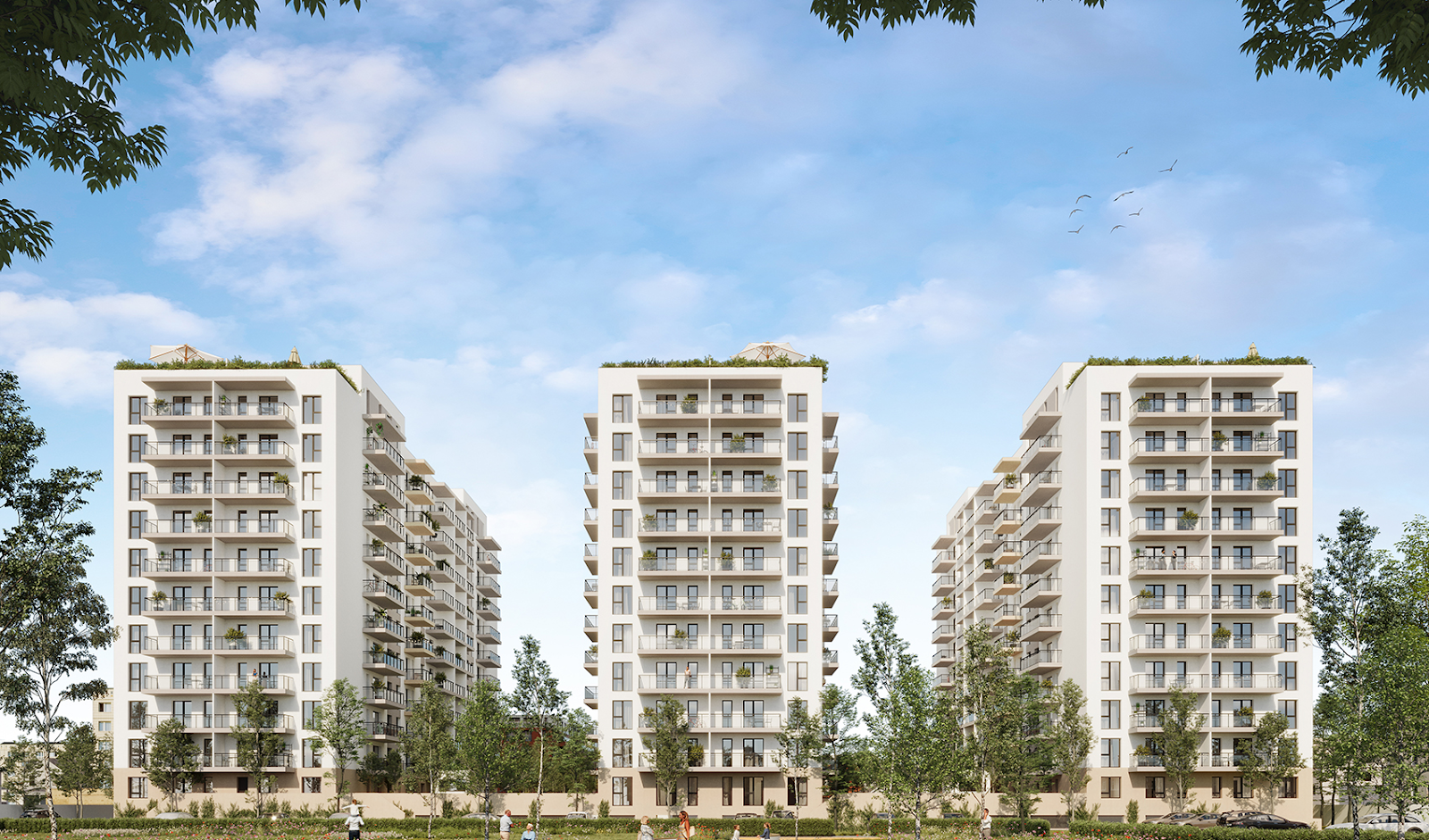
Hillls Development represents another urban regeneration initiative currently in the pre-construction and approval phase. The project plans to deliver over 5,000 apartments on a former industrial site, consistent with the strategy of revitalizing underutilized areas. (Local developer launches 180,000 sqm mixed-use urban regeneration project in Bucharest, 2023) A public completion date has not yet been announced.
The development plan spans ten years, from 2023 to 2033, with the first 370 dwellings currently under construction and scheduled for completion next year. (Marica & Irina, 2023)
The mayor of Bucharest has announced a significant urban regeneration initiative targeting the North Station area.
The primary areas to be transformed include the intermodal station, which will efficiently connect the metro, tram, bus, trolleybus, taxis, and trains. The plan also features an underground park-and-ride facility and an expansive green park with pedestrian walkways and playgrounds. Upgrades to main roads and adjacent public spaces are also included.
The Bucharest-Ilfov region is experiencing development driven by population growth and economic expansion. However, challenges persist, including the deterioration of buildings and urban infrastructure.
Inadequate maintenance of public spaces, cultural infrastructure, and heritage sites continues to negatively impact both cultural and economic development in Bucharest.Bucharest.
Another urban revitalization objective is the Laminor Hall, part of the Malaxa industrial complex, constructed in 1938 by architect Horia Creanga. The facility was later converted for steel production and, following the revolution, repurposed for logistics.
Many logistics spaces remain in disrepair, prompting stakeholders to pursue consolidation and rehabilitation to restore the built environment in the area.
Constanta masterplan
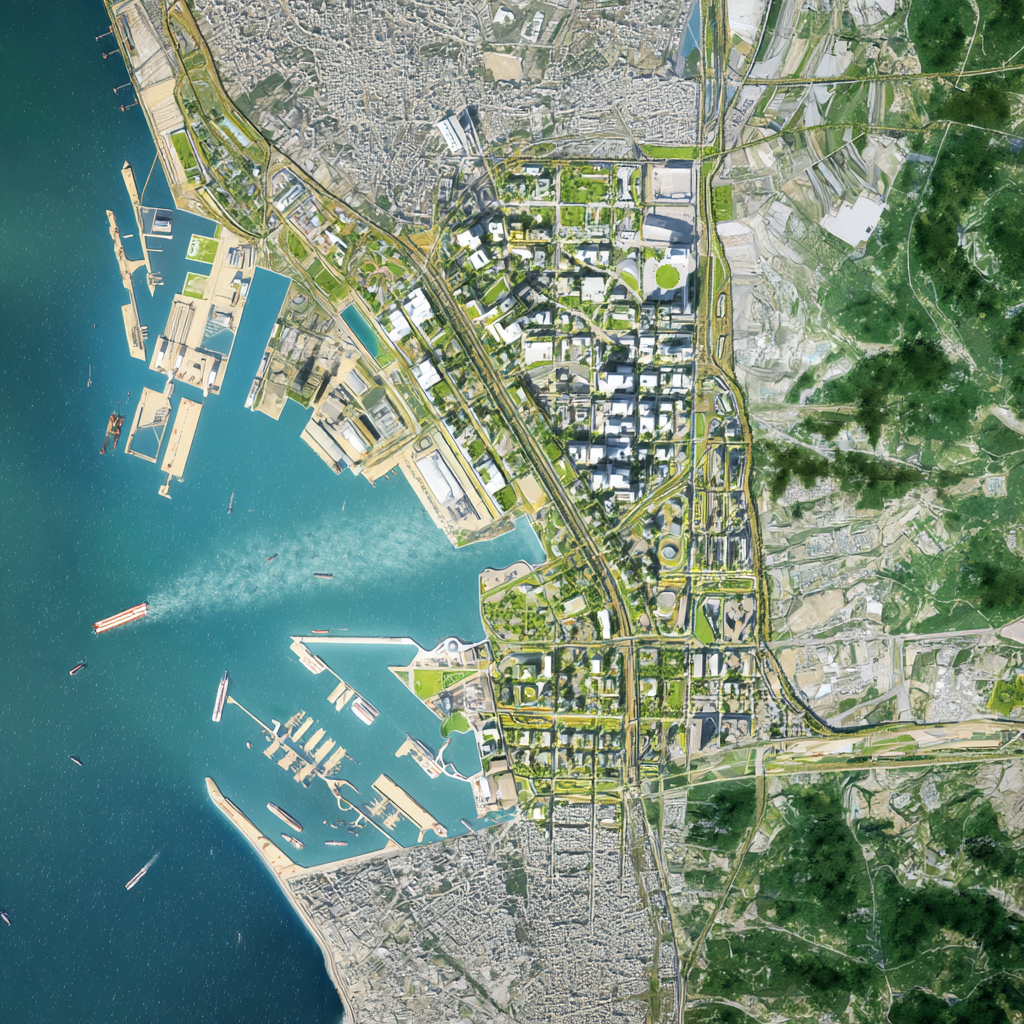
Constanța is distinct among major cities in that it lacks a central civic space. The city’s former central area has been replaced by neighborhood centers, which many residents, particularly youth and the elderly, find unsuitable for public gatherings. Numerous public spaces have deteriorated or been converted into parking lots. In response, a team of urban planning experts, coordinated by the municipality, has developed free guidebooks for the Peninsula, Mamaia, and residential districts in Constanța.
Through analysis of neighborhood issues and assessment of residents’ needs via public questionnaires, several targeted interventions have been proposed. These measures, ranging from simple to complex, can be implemented at both the area and neighborhood levels to revitalize public spaces.
Proposed interventions include widening pedestrian crossings, planting greenery along roadways, providing multifunctional urban furniture tailored to each area, installing public lighting, and adding water features. These easily implemented measures can significantly improve neighborhood aesthetics and residents’ quality of life.
Additional plans seek to decrease the presence of cars in public areas and introduce smart parking solutions. The implementation of artistic murals, expanded balconies, green roofs, and rooftop gardens is also encouraged to enhance neighborhood attractiveness.
To implement such measures, the chief architect explains that a participative approach is the best solution for tackling complex problems that have multiple stakeholders. Most of the proposals have a medium and long-term horizon of implementation, and the guide is extremely useful not only in Constanta but also for other cities in Romania.
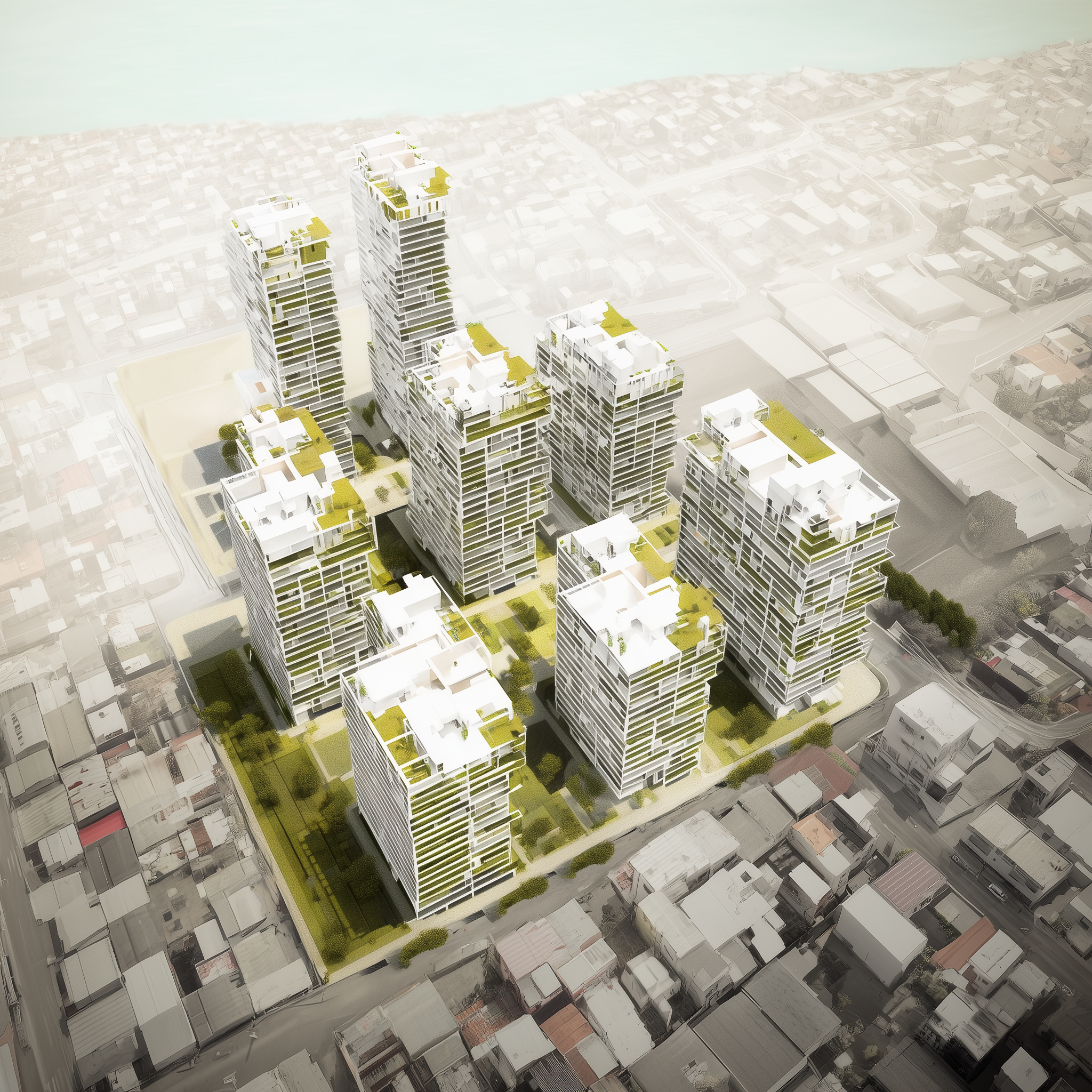
The Pit project in Marasti district
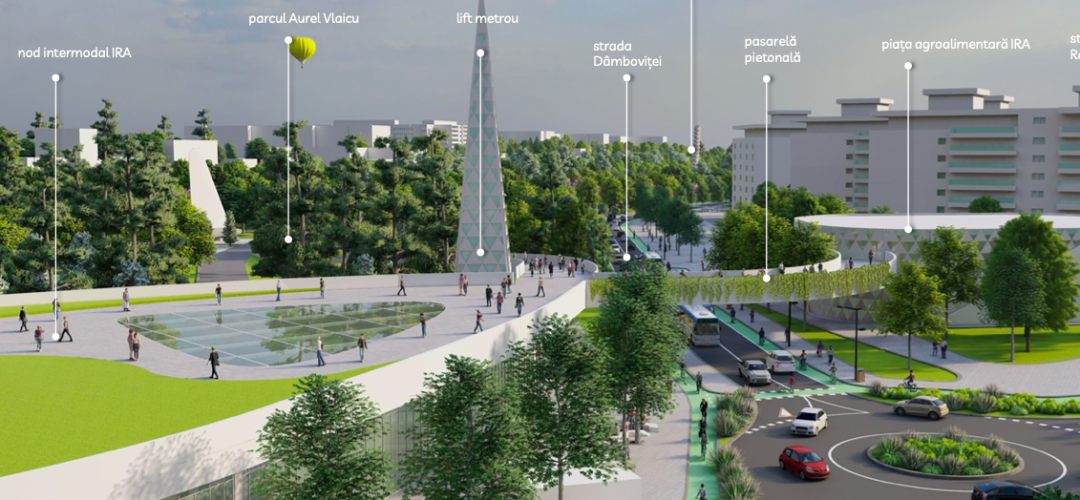
Another urban regeneration project in Cluj, known as “The Pit” in the Marasti district, aims to expand Iuliu Hațieganu Park and adjacent streets. The project also includes the construction of a new parking facility, as discussed by the municipal Urbanism Commission.
The primary objectives of the project are to address adverse environmental conditions and improve the quality of public urban spaces. Additional goals include enhancing urban prestige, attracting investment, and stimulating economic development in the area. The project encompasses a range of durable intervention strategies.
The project envisions pedestrianizing the area, allowing local residents to access sidewalks with urban furniture, public lighting, and vegetation. The redesign will reduce the number of traffic lanes from four to two, with each lane being 3 meters wide, and will incorporate bike lanes in both directions. There are also plans to widen sidewalks and create special planted areas of trees along the streets.
Speedwell development
Speedwell is a developer with experience in urban regeneration. One of its objectives is to create concepts that enhance quality of life for residents by integrating harmonious urban environments. The Citizen Project aims to blend urban functionality with elements that promote well-being. Previous Speedwell developments, such as Record Park in Cluj and Paltim in Timișoara, have also been constructed on brownfield sites, which are former industrial areas. (Record Park – Primul proiect mixt de regenerare urbana din Cluj-Napoca., n.d.)
The Citizen Project is designed to establish a new community center. The development process prioritizes the creation of open and pedestrian-friendly spaces, as emphasized by a young architect and partner at Speedwell.
The Citizen Project will be developed on a 9-hectare site, occupying part of the former Factory Zero on Calea Griviței in Bucharest. This mixed-use development will include both residential and retail spaces.
All projects are based on the principles of transit-oriented development, integrating essential facilities to support residents’ daily needs.
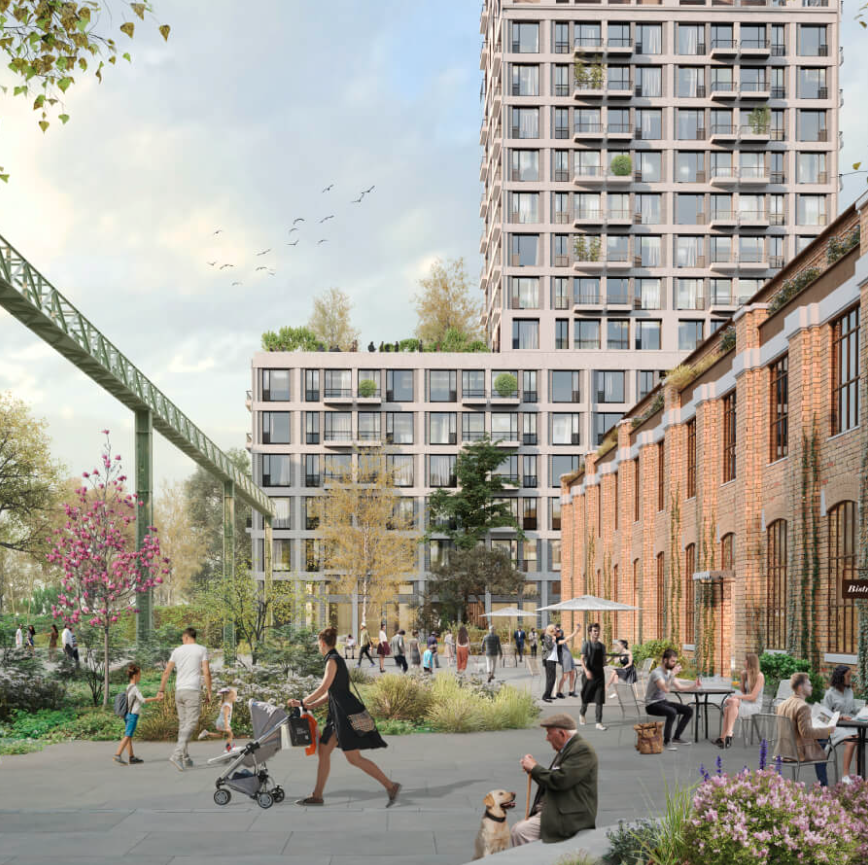
Two companies collaborate with SPEEDWELL. The master plan is coordinated by Professor Paola Vigano, co-founder of Studio Association Milan, and the ADNBA, one of the most prestigious architectural offices in Romania, works with the design part.
Sustainability is a central component of the project, which will obtain BREEAM certification. This certification helps developers and stakeholders incorporate sustainable design into urban planning for new communities and regeneration initiatives.
The project is currently on hold due to the Territorial Commission of the Bucharest municipality blocking the local development zone for designated areas.
This situation underscores the necessity for collaboration between private investors and public administration to advance urban development for the benefit of cities and their residents.
Citrus is a global developer, previously known as Emoja until June 2018. The company has adapted to better address community needs and now specializes in mixed-use urban real estate projects. Developed in 2013 as a model of urban regeneration and community revival in Romania, this project is the first of its kind, combining commercial, residential, office, entertainment, community, and public spaces within a lifespan of less than eight years, thereby multiplying local opportunities.
A renowned architectural firm has designed a new urban center that is functional, clean, and community-oriented. More than 36 hectares of previously underutilized land will be reintegrated into the city. The master plan consists of four phases: the first includes a shopping mall with over 35,000 square meters of lettable area, while the second phase focuses on retail spaces exceeding 9,000 square meters of gross lettable area.
The architectural firm’s integrated development strategies for urban mobility and regional capacity address all architectural elements, preserving local characteristics that will contribute to redefining the city.
Urban regeneration projects in Central and Eastern Europe
Cejl neighbourhood
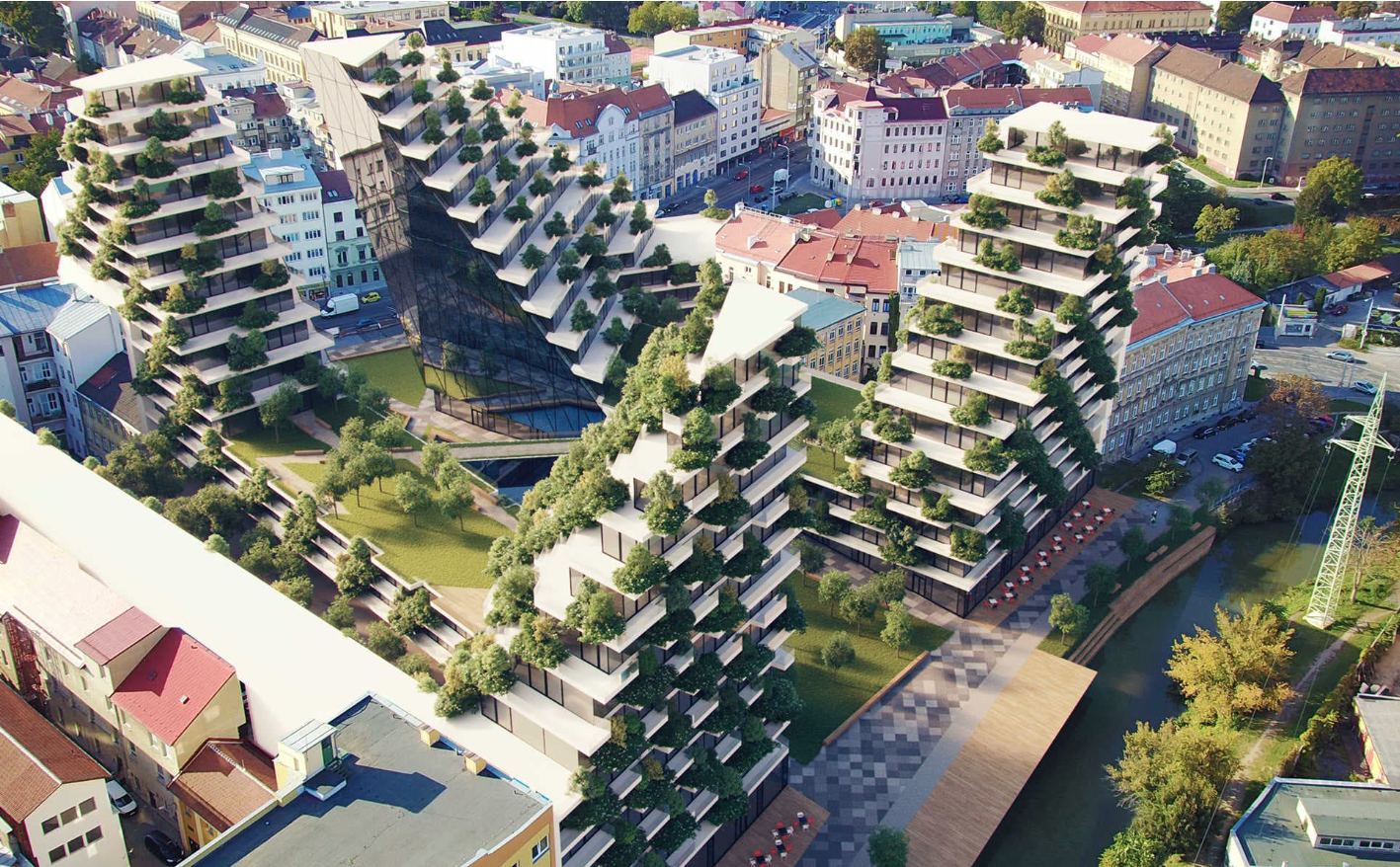
In the case of the Cejl neighborhood in Brno, one neighborhood that suffered changes was the Cejl neighborhood in Brno in the Czech Republic in the middle of the Moravia region, which is a major urban center. There were 20 hectares, with 4300 inhabitants, and there wasan unemployment rate of about 80%.
8,000 people live in the area, and it also has the nickname of the Bronx. The area is characterized by high crime rates, drug trafficking, prostitution, and so on, and it is also considered a dangerous neighborhood . It is very close to the center, and connects well with the rest of the cities so it remains a debate whether it is an excluded area or not
This urban area is made of three to 7-story bourgeois houses. They were built in the 19th century. The owners were expelled from the country after World War 2, and as a result, many Roma people working in factories in Villena fabric production moved into the area.
After the revolution, society underwent a deep transformation the state planning was we placed with decentralized. Prostitution in Bratislava streets was not as often compared to other streets in the town, as the streets at the houses were confiscated after World War Two after the Communist Party takeover.
Another aspect to take into consideration was the prevention of industrial complexes, which were sold to private owners. The production diminished due to high costs and eventually closed down. As a result of demand for housing, the administration was not prepared for such challenges. A measure to counteract this state of affairs in regards to houses’ condition, the Administration decided to sell the houses to the Citizens, but some of them could not afford to buy them, especially those from disadvantaged communities.
Another notable problem is the gentrification phenomenon, forcing the people out of the neighborhood, and in other areas, the new owners did not want to accept them because of their ethnicity.
In 1999, a unique approach was applied for the Urban renewal of the Bratislavka and Cejl Street concerning around 110 housing units. It consists of involving the local inhabitants in the process of planning and reconstruction, and as a result, more than 60 jobs were created for the members of the community. The lease contracts were renegotiated between the local people and the administration by considering the work for the project as helping to pay the rent for the house.
Even though the initiative was well-intentioned, some problems occurred during the project. It had been an underestimation of the poor state of the buildings, which led to budget increases from 2.4 million euros to 3 million Euros in addition to expenses related to the temporary displacedment of the tenants in an apartment block and to move to another area for a while until the project was completed.
In 2002 and 2003, both free constructions were finished, but we had various results, the largest difference being the composition of the community. In the first place, the tenants could leave the building during the renovation, and in the other buildings where tenants were displaced.
In the latter building, out of the original 32 families, only four returned additionally after the reconstruction. There were some problems with the tenancy agreements, which were not extended due to the problems related to paying the rent. Plus, the old problems like drug-related crime of other criminality related to answers we’re still present.
In the first establishment for the community, the structure had a stable with a lower crime rate,while in the second, the problems persisted.
One of the most notable aspects related to urban regeneration is that by involving the community in the rehabilitation of the urban environment, the crime rate is significantly reduced, the community is stabilized, and the neighborhood improves as a result.